

Yelsea Anganga
Event Planning Expert · Amazing Theme Party Planners
25 Aug 2026
15 min read
Choose the right canopy by deciding tent type, size, accessories, and installation method early to avoid undersized, unstakeable, or hard-to-assemble shelters.
Many people choose a tent based on a photo or a price. Then event day arrives and they discover the tent is too small for the guest count, can't be staked into the venue's concrete surface, or requires a six-person crew to assemble in three hours they don't have. A canopy that seats 80 when the head count was 120, or leaks at the seams during an evening shower, doesn't just create a headache; it defines how people remember the event. Getting the right canopy shelter rental locked in early prevents all of that.
Getting this right isn't complicated, but it requires making four decisions in the right order: tent type, size, accessories, and installation method. Amazing Theme Party Planners in Nairobi specializes in matching the right shelter to the right event, from intimate 20-person garden lunches to 300-plus guest weddings. This guide walks through every decision so you can book with confidence instead of correcting a mistake on the morning of the event.
The four main canopy shelter types and what each one does well
The temporary shelter market uses a lot of overlapping terminology, canopy, marquee, tent, frame structure, but there are really four distinct structural designs worth understanding. Each one was built to solve a specific problem, and choosing the wrong type creates complications that no amount of décor can fix.
A-B line tents: the workhorse for large open-air events
An A-B line tent, also called a pole tent, uses a series of center poles and perimeter poles to tension the fabric into its iconic peaked shape. Guy wires stake into the ground around the perimeter and hold the entire structure under tension. The result is a dramatic profile with excellent peak height, which makes it the go-to for large receptions, outdoor weddings, and village-style events with 100-plus guests. The tradeoff is clear: these tents need open grassy or soft ground with no overhead obstructions and adequate clearance around the entire perimeter for the guy wires. On a rooftop, a paved driveway, or a courtyard with established trees, an A-B line tent doesn't work.
High-peak canopy tents: structured elegance for weddings and galas
A high-peak frame tent replaces center poles with a rigid internal aluminum frame that creates the elevated peak from within the structure. The interior is completely unobstructed, which matters significantly for wedding layouts, award dinners, and galas where long banquet tables, dance floors, and service aisles all need clear sightlines across the space. High-peak tents can be installed on grass or hard surfaces, which makes them more venue-flexible than A-B line alternatives. For events where presentation is a primary concern, this is typically the right starting point.
Garden tents: relaxed coverage for intimate outdoor gatherings
Garden tents are lower-profile structures built for smaller guest counts, typically under 60 people. They work well for baby showers, birthday brunches, afternoon garden parties, and residential events where the scale is intimate and the aesthetic needs to stay light and natural. Their compact footprint and relatively straightforward setup make them a practical choice for residential venues, and their proportions pair well with floral and pastel décor schemes. They're not designed for heavy weather exposure or large crowds.
Frame tents: hard-surface versatility without ground stakes
Frame tents use a self-supporting aluminum frame, making them the correct choice for driveways, parking lots, rooftops, patios, and any venue where driving stakes into the surface isn't possible. On hard surfaces, a frame tent rental typically requires no ground stakes at all; on soft ground, light staking may still be used alongside ballast for added stability. They're anchored with ballast, typically water barrels or weighted plates at each leg, which means setup requires more physical equipment and more labor. Professional installation is strongly recommended for larger frame tents, or any time you cannot verify correct ballast and tensioning, because those two factors are the most common causes of canopy failure outdoors.
How to match tent size to your guest count
Tent sizing is where most planning errors happen. The mistake isn't choosing the wrong tent type, it's underestimating how much floor area a real event layout actually consumes once furniture, service stations, and circulation space are accounted for.
Square footage rules for seated and standing events
Common planning ranges give standing guests at a cocktail reception 6, 8 square feet per person. Seated guests at a round-table dinner typically need 10, 12 square feet per person (up to 15 when service aisles and circulation space are factored in). Note that estimates vary depending on layout and source; these figures reflect widely used planning baselines rather than fixed standards. Applied to common tent sizes, that works out like this:
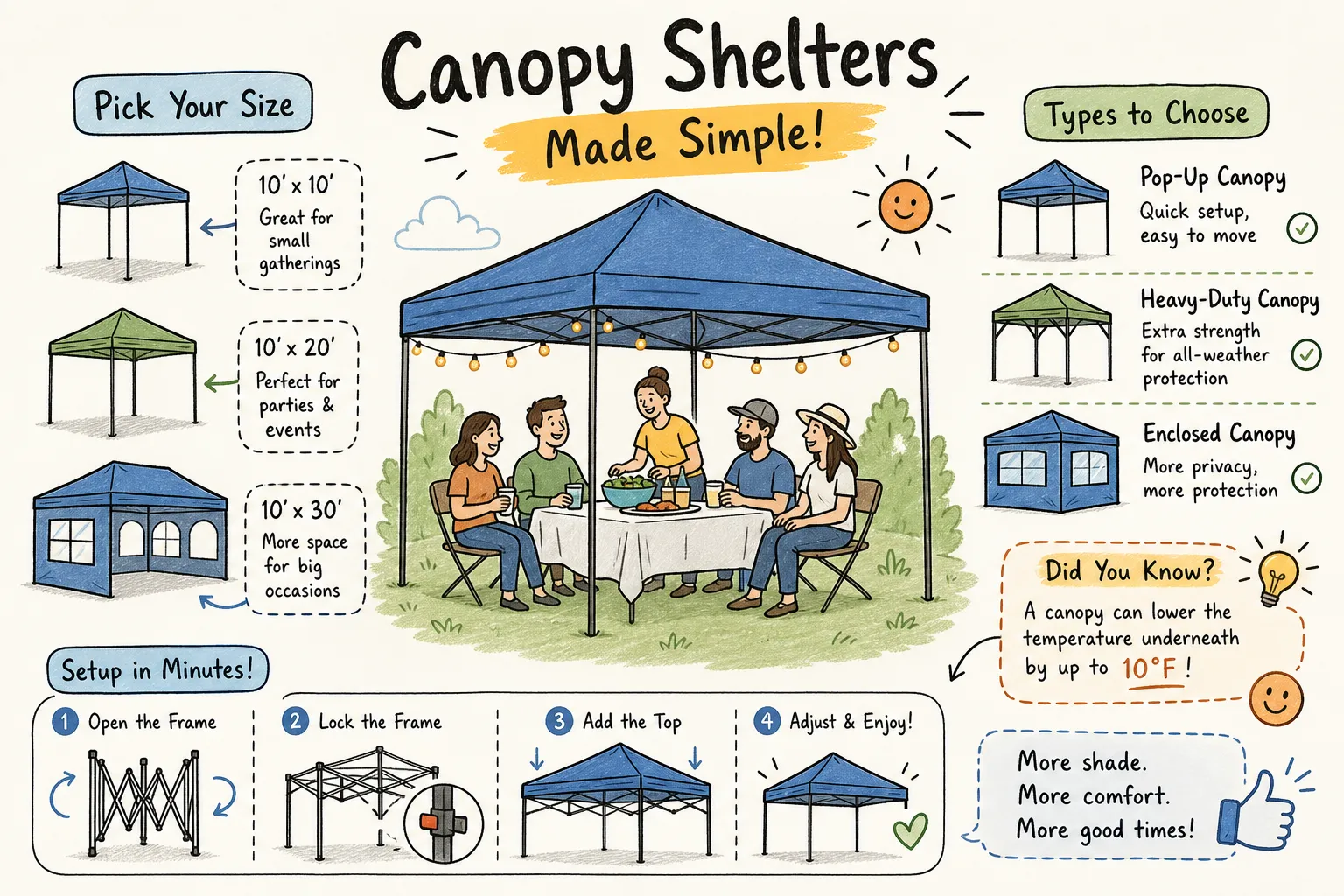
- 10x10 ft (100 sq ft): 4, 6 seated guests, 6, 10 standing
- 10x20 ft (200 sq ft): 8, 12 seated, 15, 20 standing
- 20x20 ft (400 sq ft): 16, 24 seated, 20, 40 standing
- Marquee configurations 20x40 and above: suitable for 60 to 300-plus guests depending on layout
These are planning baselines, not maximums. They assume the tent floor is used almost entirely for guests. Real events include a buffet table, a bar counter, a DJ setup, a gift table, a dessert station, or a stage. Each of those takes floor space away from guest capacity, often significantly more than people expect when they're looking at a floor plan on paper.
When to size up: furniture, catering, and flow
The practical rule is to size up by at least one tent category any time you're adding a service element. A 100-guest seated dinner with a buffet run on both sides, a DJ corner, and a small dance floor needs considerably more tent area than a raw 100-person seating plan suggests. Planners consistently recommend sizing up rather than down, a crowded, poorly flowing tent is a problem that can't be corrected once the event starts. When you're in doubt between two sizes, take the larger one. The cost difference is marginal compared to the operational headache of running out of floor space on the day.
What canopy shelter rentals actually cost in 2026
Rental pricing is straightforward when you know what's included and confusing when you don't. The structure price is only part of the invoice. Delivery, setup, breakdown, and anchoring equipment are almost always additional line items, and they're the ones that surprise people when they see the final cost.
Price ranges by tent type and size
U.S. market rates in 2026 for canopy shelter rental fall into several tiers based on structure type and scale:
- Pop-up canopy rental (10x10): $50, $150 per day; larger 20x20 pop-up configurations reach $120, $350 per day
- Mid-size frame tent rental (20x20, delivered and installed): $200, $500 per day for the frame alone
- Large frame tent rental (20x40, delivered and installed): $700, $1,800-plus per event
- Pole or A-B line tents for large events: starting around $500 per event and scaling past $3,500 for large wedding marquees, depending on configuration and local market
For events in Nairobi, the pricing structure differs from U.S. benchmarks. Garden and small canopy rental typically runs KES 3,000, 15,000; mid-size frame tents for 100-person events fall in the KES 25,000, 45,000 range; large pole tents or premium marquees for 300-plus guests reach KES 70,000, 120,000 or more. These figures vary by configuration and what's included in the quote, which is why a direct quote from the rental company is always more reliable than a market average.
The fees most people forget to budget for
Delivery alone adds $40, $250 for smaller canopy rentals in the U.S. market, and significantly more for large installed marquees where the setup crew, staking equipment, and breakdown labor are all factored in. Setup fees for frame tents are often charged separately from the structure rental. The clearest approach is to ask for an all-in quote upfront that includes delivery, professional setup, and breakdown. Rental companies that present a transparent, all-in figure, as Amazing Theme Party Planners does for Nairobi-area events, make budgeting straightforward because no line items appear after the booking is confirmed. Companies that quote the structure alone and add fees at invoice are worth approaching with detailed questions before you commit.
Accessories that make a canopy shelter rental event-ready
A bare canopy frame provides coverage. It doesn't provide an event environment. The accessories that turn a shelter into a functional, comfortable, and visually complete space are rentable line items, and they're worth budgeting for from the start rather than adding them as afterthoughts.
Sidewalls, flooring, and climate control
Sidewalls attach to the open sides of the tent and provide wind protection, privacy, and weather coverage. They're essential for evening events, rainy-season gatherings, or any event where wind channels across an open outdoor space. In U.S. markets, sidewalls typically add $30, $50 per panel to the base rental. Flooring matters most for grass-surface events, where heels sink, moisture rises, and the visual finish of the ground plane doesn't match the quality of the rest of the setup. Carpet, portable wooden dance floors, and vinyl matting are all common options, with event deck flooring typically priced around $0.75 per square foot in the U.S. market.
Lighting for evening events
Tent fabric becomes a light-blocking shell the moment natural light drops. Without interior lighting, the experience shifts from warm and ambient to dark and functional in a way that noticeably affects the energy of the event. Fairy lights and bistro string lights are the most common choice for general ambient coverage, typically priced at $30, $50 per strand. LED chandeliers and pendant configurations work well for wedding setups where ceiling height allows it, typically running $100, $150 per fixture based on current vendor pricing. External spotlights at entrance pathways and around the tent perimeter solve a separate problem: guest navigation after dark. Ambient lighting and task lighting for catering and bar areas are distinct requirements. A solid rental plan addresses both, task lighting for a bar or buffet station often means directional fixtures or clip-on LED bars in the $20, $40 range, separate from your ambient string or chandelier budget.
Anchoring and safety rules for any canopy shelter rental
Most canopy rental guides skip this section. That's a problem, because under-anchored temporary structures are a leading cause of canopy failures at outdoor events, and the consequences go beyond a ruined event.
How to anchor on different surfaces
On grass or soft ground, steel stakes driven at 45-degree angles through the tent's leg anchoring points, with guy wires extending outward, provide the primary resistance to uplift and lateral force. On concrete, asphalt, or any hard surface where stakes can't penetrate, ballast is the only option: water barrels, weighted plates, or concrete blocks at each leg. The minimum ballast for a small 10x10 canopy in moderate conditions is 40, 50 lb per leg; windier conditions push that to 60 lb per leg or higher. Larger structures require proportionally more ballast, and every leg must be anchored, not just the corners or the windward side. Selective anchoring is one of the most consistent contributing factors in canopy collapses. Professional installers assess ground conditions before setup begins and arrive with the correct anchoring method for the surface.
Wind limits and weather protocols
Standard pop-up canopies have rated wind limits in the 25, 35 mph range. Larger frame and pole tents are designed for greater exposure but still have structural limits. The practical protocol is the same regardless of tent size: monitor the forecast, inspect the structure periodically during the event, and take the tent down, or clear guests from underneath it, if conditions approach the rated limit. A professional rental company will walk through this during the setup handoff, including the specific wind threshold for the tent type being installed. That walkthrough is part of what you're paying for with professional installation.
DIY setup vs. professional installation: the honest difference
The decision between self-setup and professional installation comes down to tent size, event scale, and how the risk of getting it wrong sits with you. The conditions that favor each option are straightforward.
When self-setup is a realistic option
Pop-up canopies in the 10x10 to 10x20 range are built for self-assembly. No tools are required, setup typically takes two people 15, 30 minutes, and most rental companies include written instructions. If you're covering a small vendor booth, a garden birthday table for under 20 people, or a shading area for a casual outdoor gathering, self-setup is entirely reasonable. The customer is responsible for correct anchoring, ongoing inspection during the event, and returning the equipment without damage, but those responsibilities are manageable for structures of this scale.
Why professional setup pays for itself at scale
For anything above 50 guests, or any tent type beyond a basic pop-up canopy rental, professional installation is the right call. High-peak and A-B line tents involve dozens of components that need precise tensioning, correct staking depth, and level placement across the entire footprint. A poorly tensioned pole tent can collapse in moderate wind. Beyond safety, professional setup eliminates 3, 5 hours of event-day physical labor for the host and their team, ensures the structure is installed to the manufacturer's standard, and includes a breakdown that leaves the venue the way it was found. Amazing Theme Party Planners includes delivery, professional setup, and full breakdown as part of their service, which means the tent is never the client's logistical problem on the day of the event.
What full-service canopy shelter rental looks like from quote to teardown
The difference between a rental company and a full-service rental company is what happens between the first message and the moment the tent comes down. The former delivers a structure. The latter handles the entire shelter experience so the host can focus on the people, not the logistics.
Amazing Theme Party Planners' shelter rental range
Amazing Theme Party Planners offers A-B line, high-peak, garden, and frame tent options from their Nairobi base, covering intimate gatherings through 300-plus guest events. Their rental catalog extends beyond the tent itself: chairs, tables, linen, balloon décor, lighting, and entertainment are all available from the same company. That consolidation eliminates a category of event-day logistics most hosts don't think about until it goes wrong. Coordinating a tent from one vendor, chairs from a second, and lighting from a third multiplies the number of delivery windows, setup timelines, and contacts to manage on event day. A single supplier that covers the full setup removes that coordination overhead entirely.
From WhatsApp quote to event-day setup: the actual process
The process is deliberately straightforward. Send a WhatsApp message with your event details: guest count, venue type, surface, date, and any specific requirements. Once the tent type and accessories are confirmed, the crew arrives on event day to handle delivery, positioning, and full setup. After the event, they return for breakdown and collection. The client never touches the tent structure. For Nairobi-area clients, M-Pesa payment is accepted, and delivery pricing is provided transparently in your quote so the full cost is clear before confirmation.
How to book a canopy shelter rental without last-minute stress
Booking a canopy is a five-minute conversation when you have the right information ready. The questions below separate rental companies with a clear, complete offer from those whose quotes expand significantly between initial message and final invoice.
Key questions to ask before you confirm
Before confirming any booking, ask your rental company these directly:
- Does the rental price include delivery, professional setup, and breakdown?
- What anchoring method is included for my specific venue surface?
- What accessories are available, what do they cost, and are they included or itemized separately?
- What is the cancellation or reschedule policy for weather-related changes?
- What is the exact tent size and rated guest capacity for the configuration you're quoting?
A rental company with a clear, professional operation answers all of these without hesitation. Vague answers to anchoring questions, unclear delivery fees, or a quoted capacity that conveniently matches your guest count without accounting for furniture are signals worth taking seriously before you sign anything.
Booking timeline: how far ahead you need to plan
For small pop-up canopy rentals, 1, 2 weeks of lead time is generally sufficient. For large installed tents at weddings, corporate events, or gatherings above 100 guests, book 4, 8 weeks out during peak season. Tent inventory tightens significantly around school holidays, end-of-year corporate events, and long weekends, when multiple events compete for the same structures on the same days. If your date is confirmed, the booking conversation should start now. For events in Nairobi and Kiambu, contact Amazing Theme Party Planners via WhatsApp to check availability and get a same-day quote for your date and configuration.
Getting the shelter right from the start
Getting the shelter right means matching tent type, size, accessories, and installation method to the event. The four structures covered here, A-B line, high-peak, garden, and frame, each solve a specific problem, and none of them are interchangeable. Picking one based on price alone, or because it looked right in a photo, is how events end up with a tent that's too small, improperly anchored, or structurally wrong for the venue surface.
The sizing frameworks and cost ranges in this guide give you a working foundation, but the most efficient path from here is a direct conversation with a canopy shelter rental company that knows the structures, the venues, and the logistics. For Nairobi-area events, Amazing Theme Party Planners covers the full range, tent type selection, sizing advice, accessories, professional setup, and breakdown, so the shelter takes care of itself and you take care of the event. Reach out via WhatsApp with your date and guest count to get started.
Frequently Asked Questions
Enjoyed this guide?
Share with someone planning an event
Browse Our Rental Catalogue
Check live availability and book your party essentials today.
View Rentals & BookStay Inspired
Follow @amazingthemepartieske for more
Live setups, décor reveals & real client moments — before, during & after every event
Follow on Instagram →Related Articles
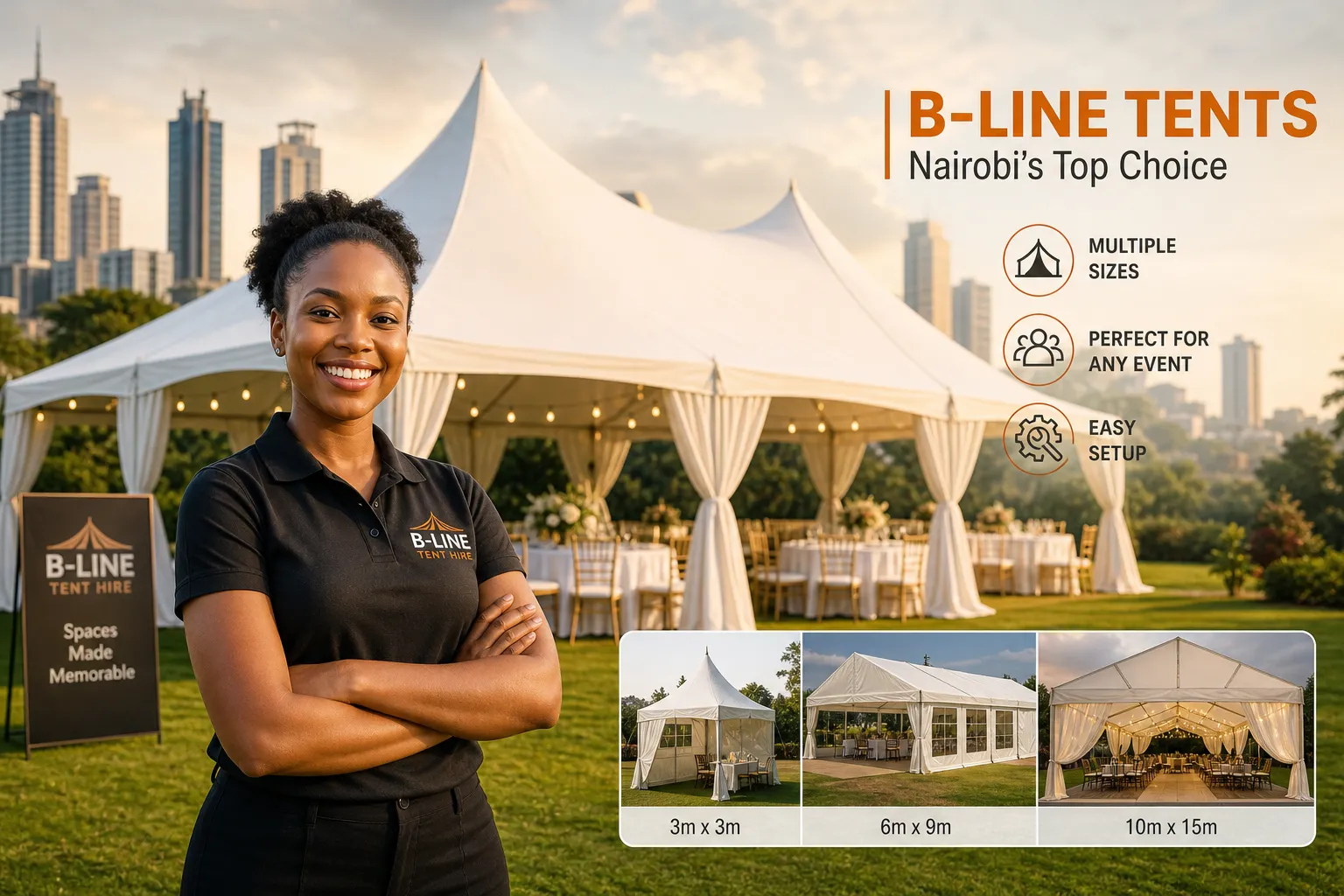
B-Line Tent Hire in Nairobi: Sizes, Uses & Setup Guide
A B-line tent is a modular rectangular/square frame style (not a brand) — lightweight 6061/T6 anodized aluminum with hot-dip-galvanized joints and PVC-coated vinyl panels
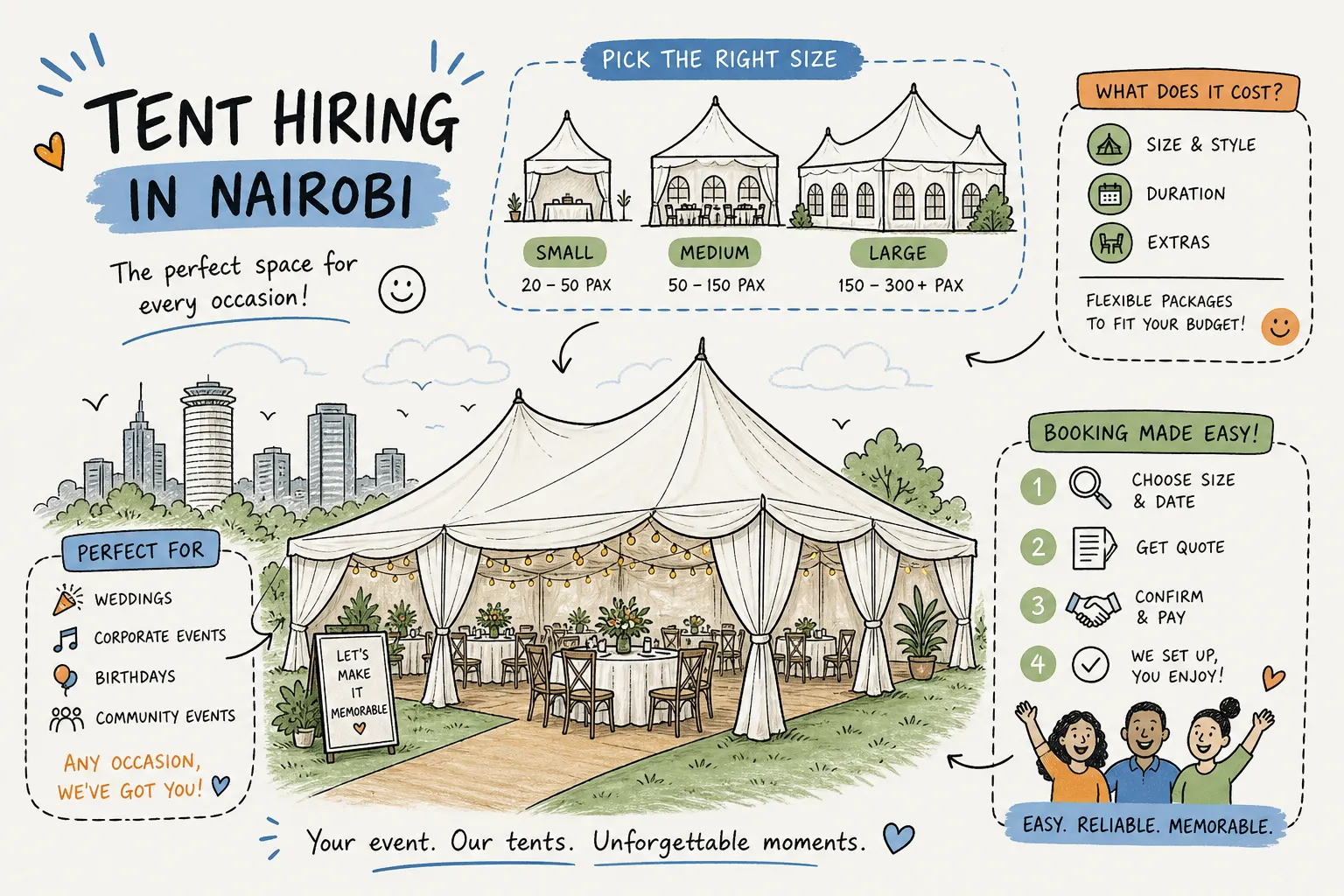
Tent Hiring in Nairobi: Sizes, Costs and How to Book Right
The guide from Amazing Theme Party Planners helps you pick the right tent in Nairobi with 2026 price benchmarks, a size guide from 3x3m canopies to large marquees .
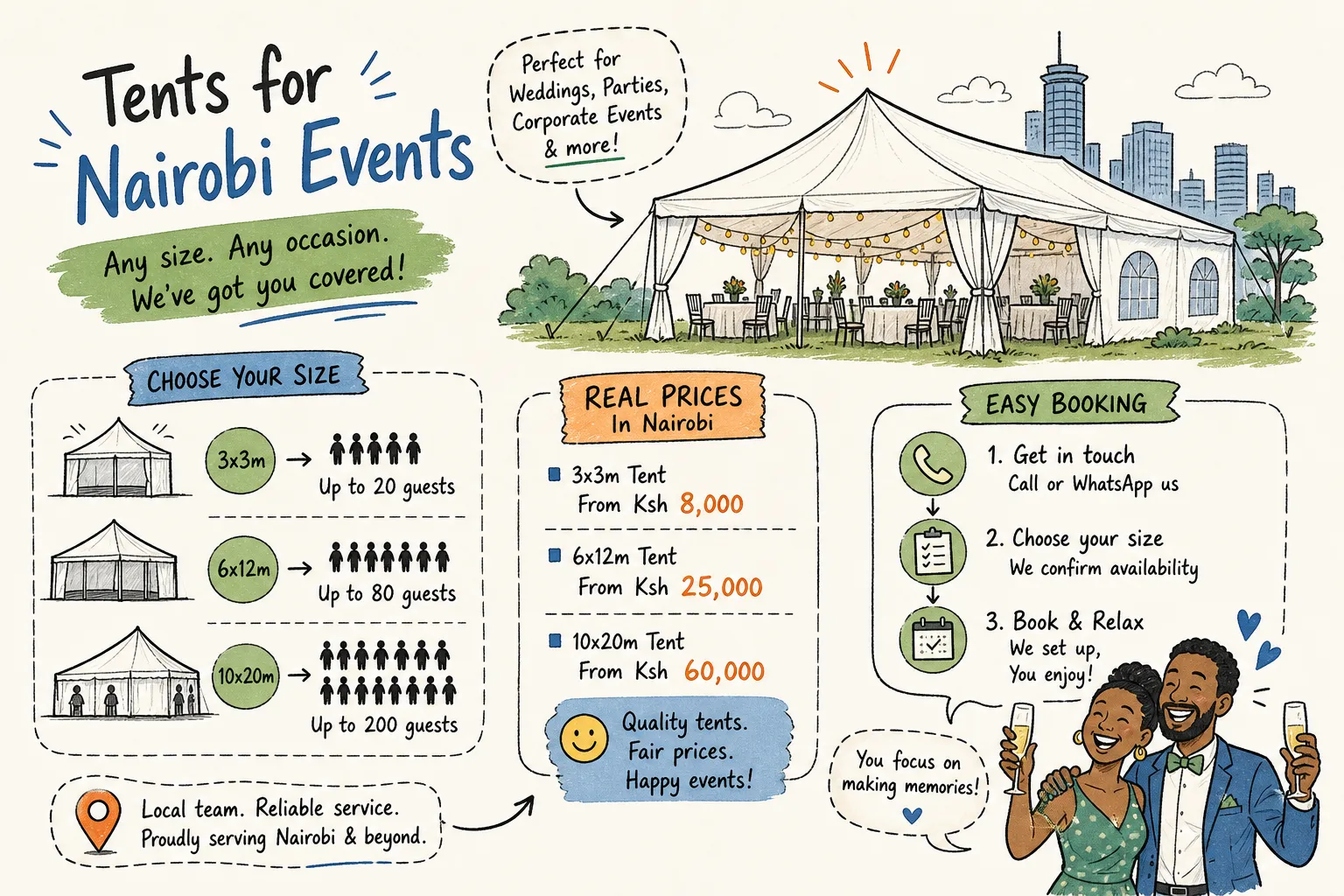
Tent hire in Nairobi: sizes, real prices and how to book
Plan tent hire in Nairobi with confidence: learn tent types, exact sizing for guest counts, realistic prices, and step-by-step booking tips to avoid surprises.
Hire & Party Services in Nairobi
🎈 Kids Party Packages
Silver, Gold & Platinum tiers
🥂 Adult Event Packages
Picnic, Silver, Gold & Platinum
💍 Wedding Packages
Silver, Gold & Platinum tiers
🎨 Decoration Hire
Themes, florals & balloon décor
⛺ Tent & Equipment Hire
Tents, chairs, tables & more
🛒 All Party Rentals
Browse the full catalogue