

Yelsea Anganga
Event Planning Expert · Amazing Theme Party Planners
02 Jul 2026
19 min read
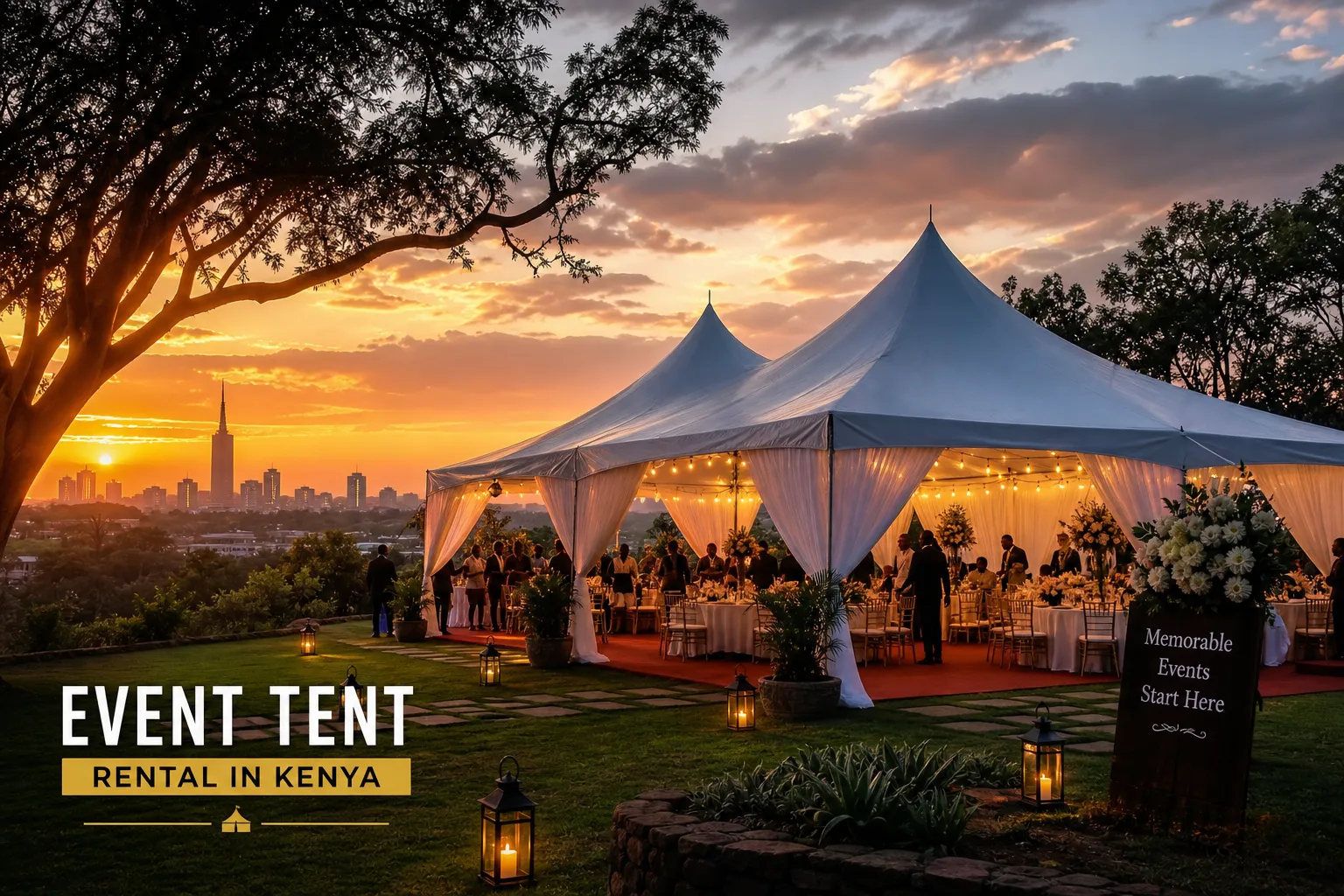
Tents for hire in Nairobi range from KES 4,500/day for a 3×3m pop-up canopy to KES 120,000/day for a 300-guest clear-span marquee. A-line marquees, high-peak canopies, and pagoda tents are all available with full erection and dismantling from Amazing Theme Party Planners. WhatsApp +254 792 788 442.
You've confirmed the venue, the food is sorted, the invitations are out, and then someone asks, "What about the tent?" For most first-time event hosts in Nairobi, sourcing tents for hire is the one decision that feels simultaneously the most technical and the most expensive. You're suddenly weighing sizes, styles, delivery fees, and supplier reliability all at once, often with a deadline breathing down your neck.
Here's what experienced Nairobi event companies will tell you, having set up hundreds of outdoor events across the city: the tent is rarely just shelter. It defines the atmosphere, the guest flow, the capacity, and the overall impression from the moment people arrive. Get it right and your event feels intentional. Get it wrong and no amount of beautiful décor will fix a cramped, leaking, or poorly anchored structure.
This guide covers everything you need to make a confident decision: tent styles available in Kenya's hire market, how to size correctly for your guest count, how to plan around Nairobi's weather, what you'll actually pay, the hidden extras, what a quality hire catalogue looks like, permit requirements, and a step-by-step booking checklist. By the end, you'll know exactly what to book, what to ask, and what to watch out for.
The main tent styles available for tents for hire in Nairobi
"Tent" is a broad term in Kenya's event hire market, and the style you choose shapes both the visual outcome and the budget. A plain frame shelter and a lined high-peak canopy can look like entirely different events even when they cover the same number of guests. Understanding the categories first saves you from comparing prices on completely different products.
A-line and B-line marquees: the workhorse of Nairobi events
A-line and B-line marquees are the most common tent type for outdoor events in Nairobi, and for good reason. A-line tents feature a simple peaked ridge running the length of the structure, while B-line variants add valance sides and a cleaner perimeter finish that suits events with defined boundaries. Both styles are scalable through modular sections, making them a reliable choice for outdoor events in Kenya across guest counts from 20 to 300 and above. Reputable hire companies stock both styles and can combine sections to create the exact footprint your venue requires.
High-peak canopy and pagoda tents
High-peak canopy tents bring dramatic visual impact: a single-point peak rises above the roofline, open sides allow airflow and a clear view of the surroundings, and the overall silhouette photographs beautifully. They work particularly well for cocktail receptions, baby showers, branded activations, and garden parties where the tent itself is part of the décor statement. Pagoda tents are the compact cousin of canopy tent hire: typically 3 m × 3 m, they function brilliantly as a standalone drinks station, welcome zone, or add-on shade area adjacent to a larger marquee. Both styles are available for daily hire across Nairobi from suppliers with a proper inventory.
Garden tents, frame shelters and stretch tents
Garden tents are lightweight structures well suited to compound and backyard setups where access is limited and the event is intimate. Frame shelters remove the centre poles entirely, which means the full floor area is usable for seating, dancing, or a buffet spread without anything getting in the way. Find examples and specifications on our Frame Tents for Hire in Nairobi | Amazing Theme Party Planners. Stretch tent hire is the modern flexible option: the fabric conforms to irregular terrain, unusual shapes, and sloped ground in a way that rigid marquees simply cannot. If your venue is anything other than a flat, open rectangle, a stretch tent is worth pricing alongside the standard options.
How to match tent size to your guest count
Sizing is where most first-timers get it wrong. They either book a tent that feels like a packed matatu or spend money on space that ends up empty all evening. Neither outcome serves your guests or your budget, and both are entirely avoidable with a simple formula applied before you request any quotes.
The area-per-person rule
The standard benchmarks used across the event hire industry are: 0.5 m² per person for standing events, 1.0 m² for seated rows without dining tables, and 1.2 m² per person for seated dining with tables and service circulation. For most Kenyan events, family lunches, ruracio receptions, birthday celebrations with a sit-down meal, the dining capacity figure of 1.2 m² per person is the one that matters most. It's the most demanding calculation and the least forgiving if you underestimate. For practical layouts, check sizing resources such as the size guide for 50 guests or the complete tent size guide for homeowners to validate your assumptions before you quote vendors.
Compare tents for hire by size: benchmarks for common Nairobi event types
Translating the formula into practical tent choices, here are the most relevant size benchmarks for events in Nairobi:
- 3 m × 3 m high-peak pagoda: up to 6 seated dining guests; best used as a décor focal point, welcome station, or drinks zone rather than main event shelter (see a typical 3 m × 3 m folding tent specification)
- 6 m × 6 m (50-seater): suited for 30, 40 dining guests once you account for a buffet table and circulation walkways
- 10 m × 10 m (100-seater): comfortably seats 80 dining guests with round tables, service access, and a small dance area
- Modular A-line or B-line sections joined together for 150, 300 guests, with capacity scaling proportionally by total square metres
What people forget when calculating tent size
Usable floor area disappears faster than you expect once you start furnishing the space. A buffet table typically takes up 3, 4 linear metres of floor space. A DJ setup needs a corner plus cable routing, a gift table, a photo backdrop, and the circulation lanes between tables all eat into the raw square metreage. Always add a minimum 10, 15% buffer on top of your guest-count calculation before finalising the tent size you request in your quote, and increase that buffer to 30, 40% if you are including a dance floor, stage, or sizeable buffet line. The additional hire cost is relatively small and far less painful than cramping your guests.
Kenya's weather and what it means for your tent choice
Kenya's outdoor events are genuinely spectacular, and Nairobi's altitude keeps temperatures comfortable for most of the year. Weather is still a real variable, though, and matching your tent specification to the season prevents avoidable problems on the day.
Planning around the long rains and short rains
Nairobi sees two primary rainy seasons: the long rains from March to May, and the short rains from October to December. Events planned during either window should prioritise tents with solid sidewalls, sealed or raised flooring options, and a canopy pitch steep enough to shed water effectively. Marquee hire with full side panels is the safest specification for these months. The long rains, in particular, can bring multi-day heavy rainfall episodes with flash flooding risks in lower-lying areas, so confirming drainage clearance around the tent footprint with your hire supplier is non-negotiable.
Heat, UV, and daytime events
For events in Nairobi's dry months, January to February and July to September, the priority shifts from rain protection to ventilation and UV management. High-peak canopy tents with open sides allow consistent airflow while the overhead canopy provides shade from direct sun. This makes them a practical and elegant choice for afternoon garden parties, baby showers, and bridal teas during the dry season, where enclosed marquees can trap heat and make guests uncomfortable.
Wind load and open ground venues
Large flat tents of 10 m × 10 m and above have considerable surface area exposed to wind, and this becomes significant on open ground: a school field in Kasarani, a compound in Karen, a riverside venue on the outskirts of Nairobi. On these sites, confirm with your tent hire supplier that stake depths are adequate for the soil type, guy-rope spacing meets the manufacturer's specification, and weight ballasting is in place for exposed corners. This isn't alarmist, it's the kind of question a reputable hire company will expect and answer clearly.
What tents for hire actually cost in Nairobi
Pricing for event tent hire in Kenya is almost always quoted per unit, per day. Understanding the baseline rates and the variables that move them up or down lets you build a realistic budget before you contact a single supplier.
Typical daily hire rates by tent type
The following daily figures, drawn from rates commonly quoted across Nairobi's event hire market, give you a working starting point:
- 50-seater plain or B-line tent: KSh 2,500, 3,000 per day
- 100-seater plain or B-line tent: KSh 3,500, 4,000 per day
- 3 m × 3 m high-peak canopy or pagoda: from KSh 2,500 per day
- A-line sections: from KSh 2,500 per day, scaling upward with total guest count
- Premium B-line tent in a full package with décor, chairs, and delivery: from KSh 70,000 for events of 20, 100 guests
These are baseline daily rates. Multi-day events, lined or draped tents, and premium tent styles will each add to the final figure, which is why an itemised quote is always worth requesting before you commit.
What moves the final price up or down
Several cost variables sit beyond the base daily rate and can shift your total significantly. Total tent size and event duration both affect the figure directly, a two-day function costs proportionally more. Venue location and delivery distance add further, as does whether the tent interior is lined or draped. Finally, whether the supplier provides a full erection and strike crew is often the biggest variable of all. Requesting an itemised quote rather than a single total figure is the clearest way to prevent invoice surprises. When you can see each line separately, you can make informed decisions about which add-ons are worth including and which you can manage differently.
When an all-in package beats standalone tent hire
For events of 50 or more guests, bundled packages that combine the tent, chairs, delivery, and setup frequently offer better value than sourcing each item from separate vendors. Chasing three or four suppliers, aligning delivery times, and managing different payment systems all carry a real cost in time and stress. Bundled packages often reduce that coordination overhead and can offer better value, compare itemised quotes against the package price to confirm the savings before you decide.
Extra charges that catch first-time hirers off guard
A transparent hire supplier will present these costs upfront. If they don't, ask specifically, because these extras can add a meaningful percentage to the total you've budgeted.
Delivery and pitching fees
Delivery and pitching policies vary by supplier, some include both in the quoted package price, others bill separately or apply distance-based fees. Always confirm in writing whether your quote covers delivery, pitching, and strike (dismantling after the event). The phrasing matters because "delivery" does not automatically include assembly, and "setup" does not always include the return journey to collect the tent afterwards. A venue in Limuru or Machakos, for example, may attract a higher delivery fee than one in Westlands or Kilimani, so ask about any distance charges before you agree to a total.
Optional add-ons worth budgeting for
The most common extras that transform a functional tent into a finished event space include tent lining or draping (which converts a plain white interior into an elegant venue), matting or flooring (critical for grass, uneven ground, or any venue where guests will be in heels), perimeter lighting for evening events, and generator hire where mains power is unreliable or unavailable. Sourcing these extras from the same supplier as the tent often carries a small premium, but the saving in coordination effort, particularly on setup day, consistently outweighs the marginal cost difference.
Deposits, damage waivers and what to check in the contract
Many suppliers request a deposit (often between 30% and 50% of the total invoice) to secure your date, confirm the exact amount in your quote before signing anything. Check whether the contract includes a damage waiver clause, what the excess covers, and whether you're liable for structural damage caused by weather versus accidental damage caused by guests. Equally important: confirm the agreed erection time and strike time in writing. Both protect you if the supplier is late to set up or delays the dismantling beyond your venue's permitted hours.
What a quality tent hire catalogue actually looks like
Not all tent hire companies in Nairobi operate with the same depth of inventory or the same standard of service. Knowing what a reputable supplier's catalogue should contain helps you qualify vendors quickly rather than discovering their limitations after you've paid a deposit.
Variety across styles and capacities
A reliable hire company stocks multiple tent styles so they can match the right shelter to your specific event type, rather than pushing you towards whatever happens to be available. The range should span A-line and B-line tents for large gatherings, high-peak canopy tents for elegant intimate setups, garden tents for compound and backyard events, and frame shelters for layouts where centre poles would compromise the floor plan. That kind of breadth, covering everything from a 20-person baby shower to a 300-guest wedding reception, is what separates a serious hire operation from a vendor with a single tent style and limited flexibility. About Us | Amazing Theme Party Planners, Nairobi Event Hire Since 2020.
Professional setup as a non-negotiable
The tent is only as good as the team that erects it. A quality company arrives on time, pitches correctly with proper anchoring and guy-rope tensioning, and returns to strike at the agreed time without requiring you to chase them. For Nairobi events where time pressure before guests arrive is real, responsive quoting and transparent payment options, such as M-Pesa or bank transfer, can be practical markers of a professionally run operation. They signal that the business is structured, responsive, and used to managing client expectations clearly, which matters as much as the tent itself. Ask for references and photographic portfolios from similar-scale events to confirm the standard before you commit.
Three questions to ask any tent hire company before you commit
Before you pay any deposit, these three questions will tell you most of what you need to know about a supplier:
- Do your hire prices include delivery, pitching, and strike, or are these billed separately?
- What is your wet-weather contingency if the tent develops a leak or a pole fails on event day?
- Can I see a portfolio of photos from similar-scale events you have supplied?
Clear, evidence-based answers to these questions indicate genuine experience. A supplier who deflects or gives vague responses is telling you something important before you've committed a single shilling, request references and photographic portfolios if the verbal answers feel thin.
Permits, venue rules, and safety checks in Nairobi
Many first-time event hosts in Nairobi don't know this step exists until a county inspector arrives on setup day. It's one of those things that feels like small print until it becomes the main story, so here's what you actually need to know.
Nairobi City County permits and public venue approvals
Erecting a tent on public land or within county-managed spaces in Nairobi requires an event permit from the Nairobi City County Department of Environment and Natural Resources. Private venue bookings, hotels, event gardens, country clubs, typically handle permit compliance internally, but organisers using open compounds, school grounds, or roadside plots must apply directly. Submit your application at least three weeks before the event date: county inspectors conduct spot checks, and an event without the required fire safety certificate can be shut down on the day. If your event includes amplified sound, a separate noise permit from the Sub-County Environment Office is also required. For a practical overview of county by-laws and permit requirements, see navigating county council by-laws, permits, noise licences and security.
Fire safety and structural compliance
For tents of 20 ft × 40 ft (roughly equivalent to a 65, 80 guest seated configuration) and larger, a temporary building permit with an engineered inspection is required under Kenyan standards. Your tent hire supplier should be able to provide a fire retardancy certificate for the tent fabric as part of their documentation. Beyond the certificate, ensure that emergency exits are clearly marked and unobstructed, that at least one fire extinguisher is on site per exit point, and that the evacuation routes are communicated to your event crew before guests arrive. Permit fees for private events typically range from KSh 5,000 to KSh 15,000; public events can exceed KSh 50,000 depending on attendance and location.
Noise, crowd capacity and private venue rules
Many private venues in Nairobi, particularly hotels, country clubs, and managed event gardens, have their own tent and structure restrictions that operate separately from county requirements. These may include crowd capacity limits, noise curfews (commonly 10 p.m. in residential areas), restrictions on staking into landscaped ground, and power access limitations. Confirm all of these in writing with the venue manager before you finalise your tent hire booking. A conflict discovered on setup day, between what you've hired and what the venue will permit, is an expensive problem to resolve at short notice.
A simple booking checklist to keep your event under cover
All the information in this guide is useful only if it translates into action. This checklist condenses the process into eight sequential steps that take you from first enquiry to a confirmed, compliant tent booking.
From first enquiry to confirmed booking (steps 1, 4)
- Confirm your guest count, event type (dining, cocktail, or mixed), and the full venue address including any access constraints such as narrow gates or sloped ground.
- Request an itemised quote from at least two or three tent hire companies in Kenya, comparing tent style, size, delivery, pitching, and strike as separate line items rather than a single bundled total. If you need a starting list of local suppliers, see this round-up of best wedding tents hiring companies in Kenya.
- Share a site photo or video with the supplier so they can advise on ground conditions, drainage, and access before recommending a tent style and anchoring method.
- Confirm availability and secure your date with the required deposit via M-Pesa or bank transfer, and get written confirmation of the booking by return.
Setup day essentials to confirm in writing (steps 5, 8)
- Agree on an erection time that gives the crew at least 2, 3 hours to complete setup, lining, and lighting installation before your first guest arrives.
- Confirm sidewall and lining specifications: if the event runs into the evening or the season puts you in a weather risk window, these are not optional extras.
- Verify electrical access points inside the tent footprint so that the electrician and the tent crew are not working against each other on the morning.
- Get the supplier's direct emergency contact number, not just the office line, for use on event day if any issue requires an immediate response.
The one thing most first-timers skip
Always do a walk-through of the erected tent before the event begins. Check the anchoring at each peg point, check the flooring for gaps or lifting edges, check the lighting coverage, and confirm that the exit points are clear. A good tent rental supplier in Nairobi will expect this walk-through and welcome it as a chance to make any last-minute adjustments before guests arrive. It takes twenty minutes and eliminates the kind of problems that would otherwise surface mid-event when they're hardest to fix.
Choosing your tents for hire in Nairobi with confidence
Getting the right tent comes down to five decisions: the right style for your event type, the right size for your guest count plus buffer, weather-appropriate specifications for the season, a clear-eyed budget that includes every line item, and a supplier with the inventory depth and service standards to deliver reliably. Work through each one carefully and the rest of your planning becomes considerably easier.
The best outcomes consistently come from booking early, asking detailed questions before paying any deposit, and working with a hire company that offers a diverse catalogue, transparent pricing, and a professional setup crew. Amazing Theme Party Planners brings all of this together: a premium inventory spanning multiple tent styles and capacities, professional delivery and erection, and a fast WhatsApp quote turnaround that takes the stress out of the initial planning stage.
Ready to lock in your tents for hire before your date goes? Share your event date, guest count, and venue location via WhatsApp and get a same-day itemised quote from Amazing Theme Party Planners. The process takes two minutes on your end and gives you everything you need to make a confident decision without chasing multiple vendors.
Frequently asked questions about tents for hire in Kenya
For additional detail and extended answers, see our FAQs | Tents, Furniture, Balloon Décor, Kids Parties, Corporate events and product launch Hire, Amazing Theme Party Planners.
How much do tents for hire cost in Nairobi?
Daily hire rates vary by tent size and style. A 50-seater B-line tent typically starts at KSh 2,500, 3,000 per day, while a 100-seater runs KSh 3,500, 4,000. Full packages including décor, chairs, and delivery start from around KSh 70,000 for events of 20, 100 guests. Always request an itemised quote so you can see delivery, pitching, and extras as separate line items.
What is the best tent type for an outdoor event in Kenya during the rainy season?
Marquee hire with full side panels, sealed flooring, and a steeply pitched canopy is the safest specification during Nairobi's long rains (March, May) or short rains (October, December). Confirm drainage clearance around the tent footprint with your supplier before the event date.
Do tent hire companies in Kenya include delivery and setup in their prices?
Policies vary. Some suppliers include delivery, pitching, and strike in the quoted rate; others bill these separately or apply distance-based fees. Always ask for confirmation in writing and check that "setup" covers both assembly and the return collection after the event.
How far in advance should I book tents for hire in Nairobi?
For peak-season dates, particularly the months surrounding Christmas, Easter, and the August school holidays, booking four to six weeks in advance is advisable. For events during county permit windows, factor in at least three weeks for any required approvals.
Frequently Asked Questions
Enjoyed this guide?
Share with someone planning an event
Browse Our Rental Catalogue
Check live availability and book your party essentials today.
View Rentals & BookStay Inspired
Follow @amazingthemepartieske for more
Live setups, décor reveals & real client moments — before, during & after every event
Follow on Instagram →Related Articles

B-Line Tent Hire in Nairobi: Sizes, Uses & Setup Guide
A B-line tent is a modular rectangular/square frame style (not a brand) — lightweight 6061/T6 anodized aluminum with hot-dip-galvanized joints and PVC-coated vinyl panels
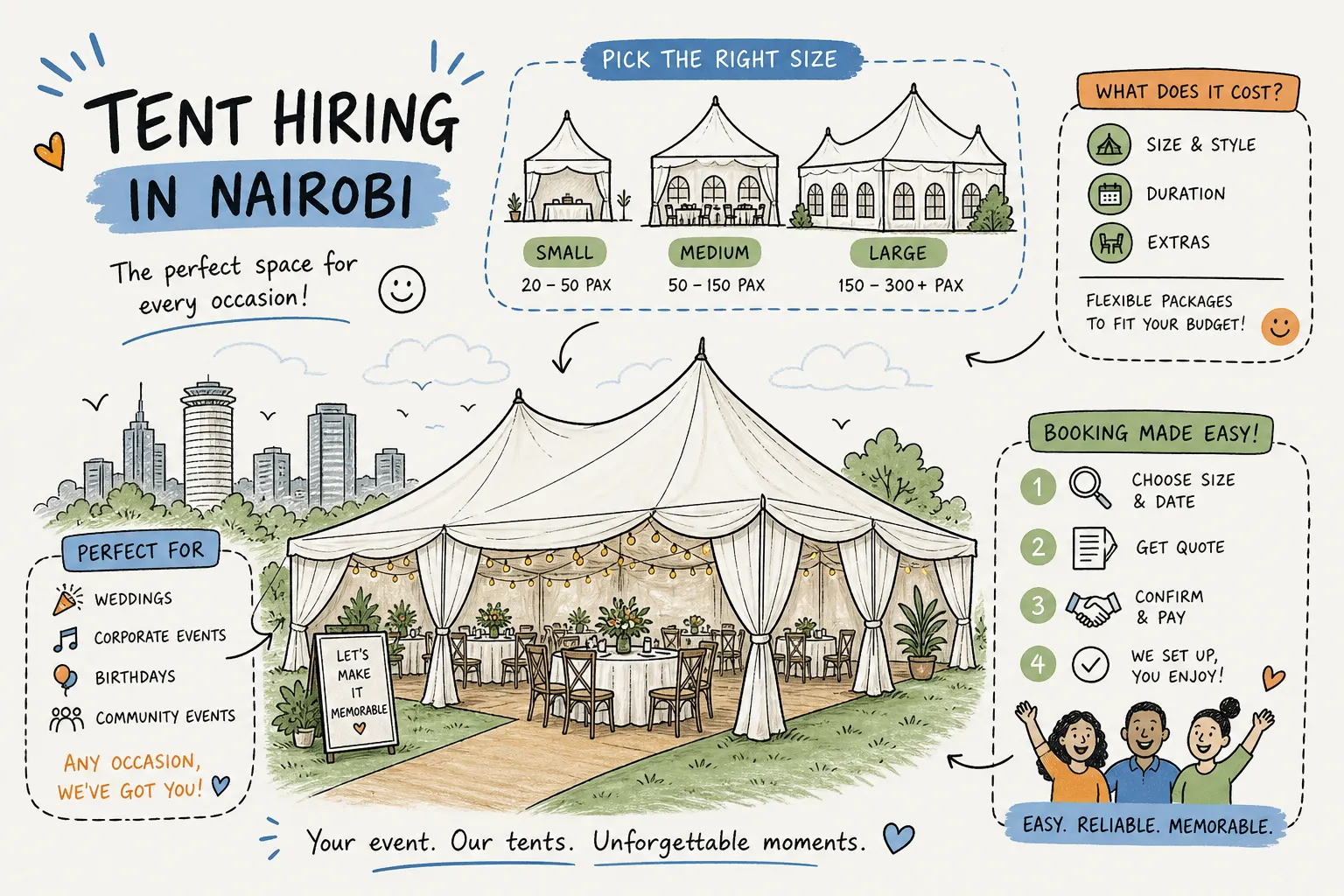
Tent Hiring in Nairobi: Sizes, Costs and How to Book Right
The guide from Amazing Theme Party Planners helps you pick the right tent in Nairobi with 2026 price benchmarks, a size guide from 3x3m canopies to large marquees .
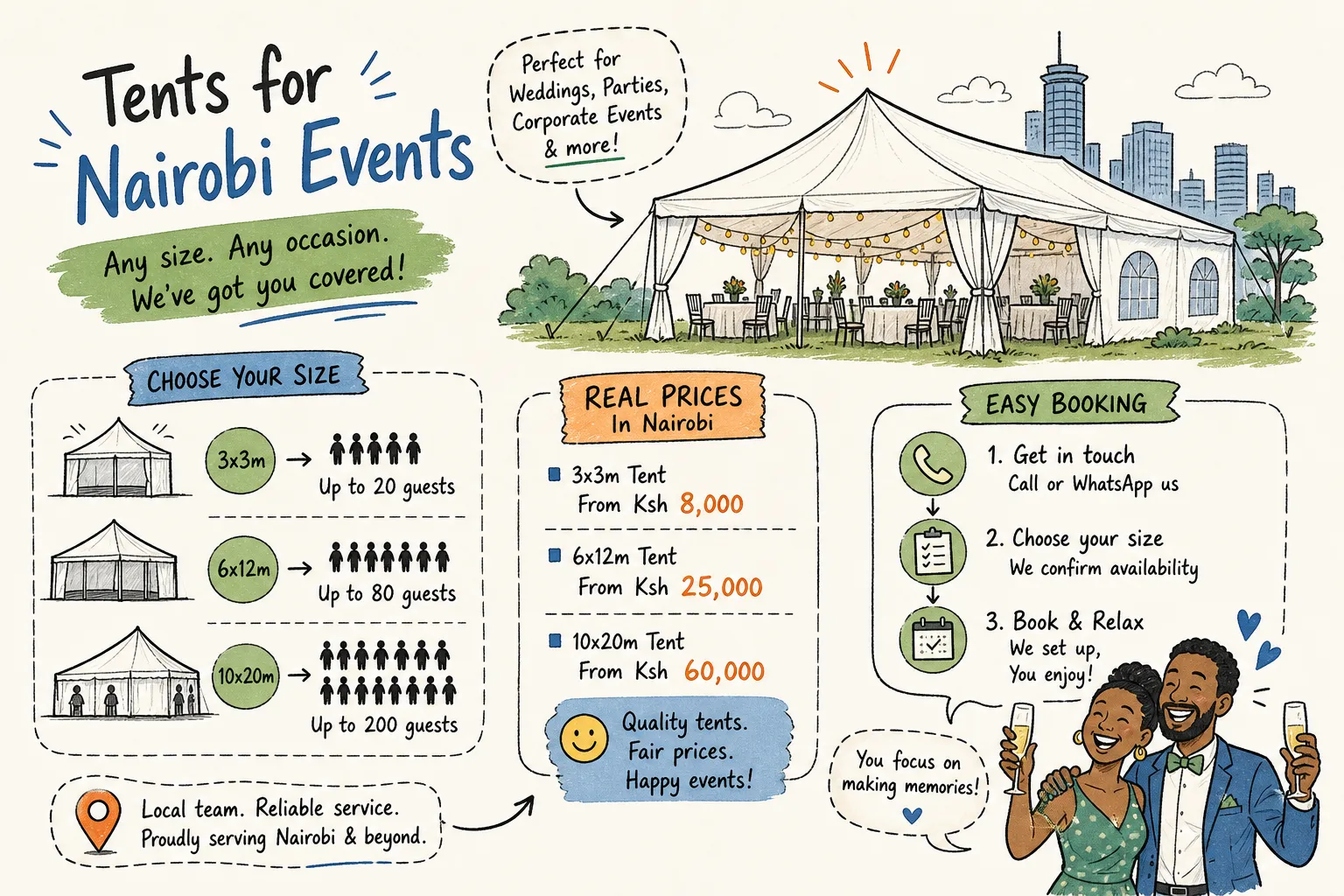
Tent hire in Nairobi: sizes, real prices and how to book
Plan tent hire in Nairobi with confidence: learn tent types, exact sizing for guest counts, realistic prices, and step-by-step booking tips to avoid surprises.
Hire & Party Services in Nairobi
🎈 Kids Party Packages
Silver, Gold & Platinum tiers
🥂 Adult Event Packages
Picnic, Silver, Gold & Platinum
💍 Wedding Packages
Silver, Gold & Platinum tiers
🎨 Decoration Hire
Themes, florals & balloon décor
⛺ Tent & Equipment Hire
Tents, chairs, tables & more
🛒 All Party Rentals
Browse the full catalogue